Proper On-Page Optimization Follows a Planned Sequence

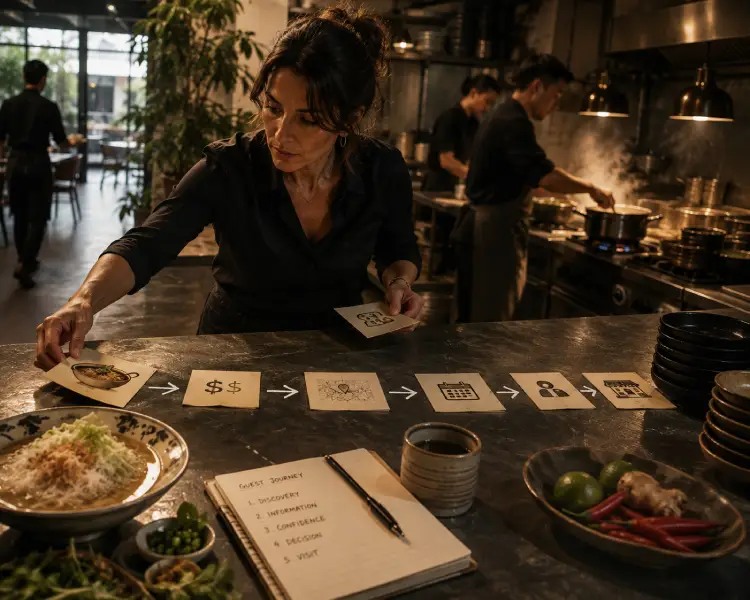
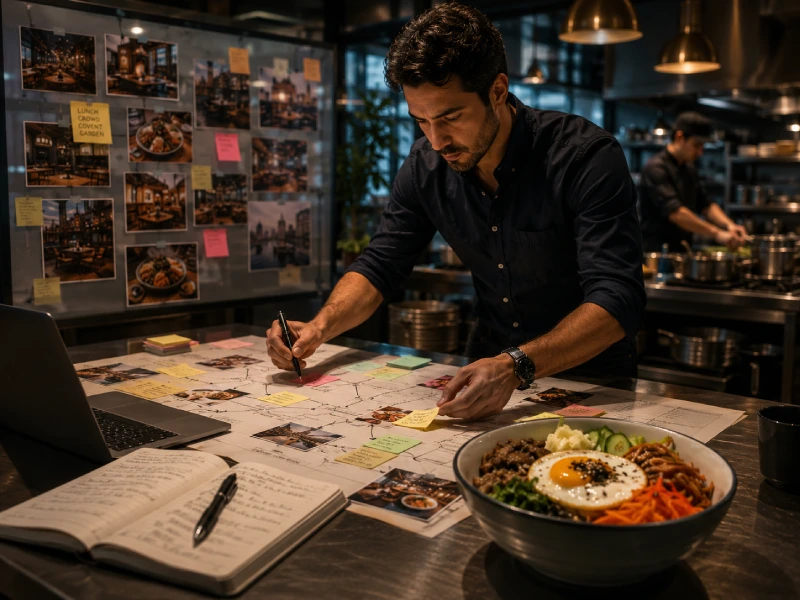
A restaurant marketing head is doing on-page optimization on his restaurant website.

On-page content enhancement works best in sequence.

The topic of a page must be defined before its internal links, content, slug, title, headings, opening paragraph, or images are touched. It’s because each later element depends on that first decision.

Restaurants and businesses that revise pages without this order often see inconsistent results, while those that follow it gain steadier visibility in AI-generated answers. This sequence turns scattered page edits into a system that compounds across an entire website.

Blog Category Page Beyond Navigation

a marketing head of a restaurant learns about blog category page

In content production, category pages are often dismissed as simple navigation, yet that assumption hides a bigger opportunity. A well-structured category page works as a topic hub: it aligns with search intent, links articles with context, and signals topical authority to search systems.
This structure can help a category page outperform equally strong competitors, without requiring more content. The real priority is ensuring every article has a real chance to be discovered.

Choose A CMS for Scalable Restaurant Marketing

How content management system helps SEO performance of a website of a restaurant which serves sate plecing

Your CMS is not a tech decision, but it’s a decision for marketing governance. Get it wrong, and your team loses control of the website to developers, agencies, or outdated code. This guide breaks down how CMS works, which platform fits your operation, and which technical skills protect your SEO performance without turning your marketers into engineers. If your content strategy is stalling at the execution layer, the problem is usually here, and find out more about it behind the image above.