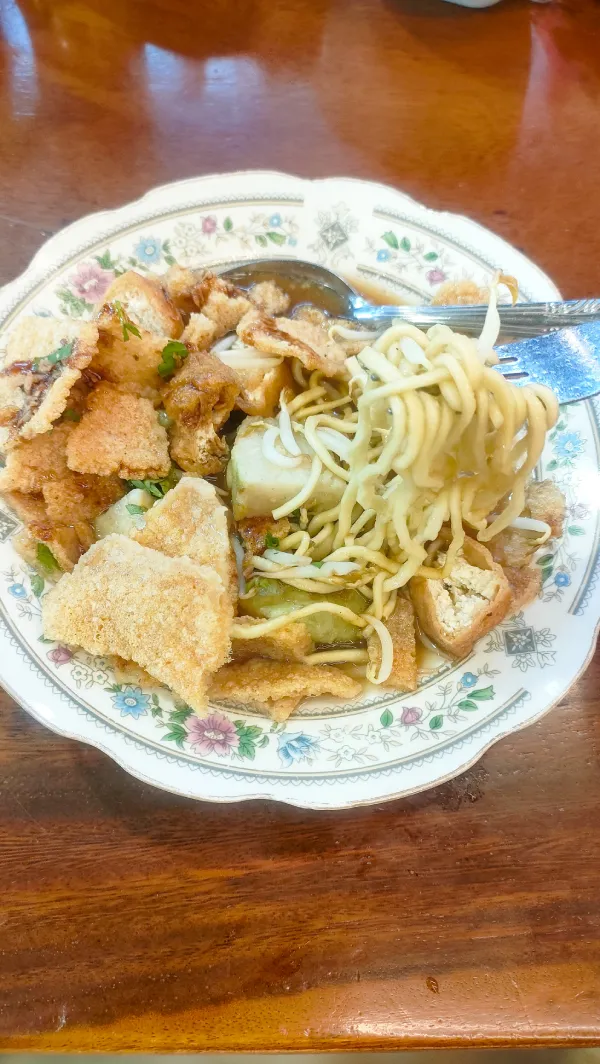
Many eateries often attract visitors through product-oriented searches, such as “best mie kopyok near me”. You may have expected these visits to translate into high-value actions from these queries, only to realise that clicks arrived without orders. Frustration usually falls on page speed or visuals, yet the real issue lies elsewhere that the query itself failed to indicate purchase readiness.
The misalignment between browsers and buyers stems from a misunderstanding of what people expect when entering specific phrases in mobile devices, versus what product pages have been optimised to satisfy. In many cases, optimisation targets commercial evaluation rather than transaction completion. Transactional search intent describes queries where someone plans to perform a concrete action: placing a food order, reserving seats, or initiating a WhatsApp enquiry.
How Search Intent Maps to Buying Readiness
Before fixing this mismatch, try to recognise how searcher behaviour has evolved over time.
Query patterns generally progress from low commitment to high commitment across four distinct categories: informational, navigational, commercial, and transactional.
Below are the definitions of each queries:
Informational intent shows early-stage problem awareness. In associating with your offering, they’ll type phrases like:
- “what is mie kopyok”
- “how to cook mie kopyok”
- “guide to eat mie kopyok in Semarang”.
Purchase motivation is absent at this stage, but they’re forming context and building knowledge to familiarise themselves with our product.
Navigational intent indicates brand or destination familiarity, where the user wants to reach a specific site or page they already trust. To connect with your business, they’ll type example words like:
- “mie kopyok Pak Mitro”
- “miekopyokmitro dot com”
- “miekopyokmitro menu”.
At this stage, the intent is to reach a known restaurant or brand as quickly as possible.
Commercial intent signals active comparison and evaluation. They’re probably making a short list, so the examples can include:
- “best mie kopyok in Semarang”
- “top rated warung mie kopyok near me”
- “mie kopyok Pak Mitro vs mie kopyok Pak Sugeng”
Transactional intent represents readiness to act. Users expect clear next steps, pricing signals, or conversion paths.These contain action modifiers, like “order”, “book”, and “reserve”. Its examples can be:
- “order mie kopyok online”
- “book a table for mie kopyok near me”
- “mie kopyok delivery 10 AM”.
Pages that fail to respond to these queries miss the most commercially valuable moment.
Most revenue stagnation on websites stems from mismatches between what audiences want and what the website delivers. If any page fails its intent-specific job, no amount of SEO improvement will recover lost conversions.
In one engagement, the audiences that my client targeted actively consumed nutrition discussions, but ignored the prompts that focused on execution. Then the audience left conversion at zero. This happened because my client pushed to include transactional keywords on informational pages I’d planned, which collapses revenue potential rather than unlocking it.
This isn’t just a one-off mistake. Understanding these distinctions matters because each intent category corresponds to a different funnel stage.
Misplacing content at the wrong stage suppresses conversions, no matter how good your SEO execution is.
Vicky Laurentina, 2026
In multi-location teams, this usually shows up as inconsistent page structures and conflicting optimisation approaches across properties. I’ve outlined an audit framework that I’ve standardised to fix it in this audit system for on-page SEO. Find out for aligning pages with outcomes that you can measure.
Determine Intent Using Observable Signals
Now that we’ve defined the four intent types, the next challenge is classifying queries before we build pages.
Purchase-Readiness Diagnostic
Below is the signal test I run with clients to accurately determine what people actually want. If you only have 30 minutes, examine these signals. If the 3 of these 4 are true, the query should be treated as transactional.
Signal 1: Any features in the search engine results page that indicate purchase intent.
- I scan for local packs containing reservation buttons, and any call-to-actions with anchor text “order online” in results.
- If there are no local packs, but the result is dominated by boxes of People Also Ask, or carousels of social media, then it usually indicates non-transactional intent.
Signal 2: Each page that ranks in the top 5 matches transaction behaviour.
- Top-ranking results should primarily include restaurant listing aggregators, deal platforms, or direct product pages.
- If the result is dominated by comparison articles, how-to guides, or review content, it’s not a transactional signal.
Signal 3: Action verbs appear in titles or metadescriptions.
What I mean by action verbs are “buy,” “order,” “book,” “reserve,” “get,” or “schedule”, which reinforces transactional classification.
Signal 4: Your revenue data confirms conversion.
- Identify which URLs generate orders, calls, or bookings.
- Examine what queries have driven traffic to those pages.
- Note patterns in converting vs non-converting queries.
- Validate findings by cross-referencing against your ad data, if available. Any keywords that drive ad conversions warrant organic prioritisation.
”Clicks on paid search listings beat out organic clicks by nearly a 2:1 margin for keywords with high commercial intent in the US.” (Kim, 2023)
If you only need to classify intent correctly, the signals above are sufficient. The section below outlines the factors that prevent conversion, even when the intent is correct.
Common Misreads That Suppress Conversions
Even with solid processes, certain mistakes keep appearing in audits. Each pattern I see consistently drains income.
| Mistake | What Goes Wrong | Impact |
| Overweighting keyword difficulty scores to prioritise phrases | Niche and geographic nuances ignored | Missed high-converting low-volume queries |
| Assuming commercial and transactional intents are interchangeable | Letting other brands mentioned in transactional page, like in commercial page | Execution stage gets distraction, prevent from conversions |
| Setting traffic as the sole success metric | Ignoring orders or reservations as metric | Income stays flat |
| Ignoring the SERP evolution | Intent shifts undetected | Declining relevance |
One year, I learned that the keyword “sushi maki” was searched by people looking to learn how to make makizushi. I followed up by creating content about it, and I saw an increase in traffic. After a couple of years, I found that the page’s traffic had declined, even though its CTR hadn’t.
When I re-evaluated the SERP, searchers had shifted from “how to make” (informational) to “where to buy” (transactional). Without adaptation, relevance will decay, despite a stable click-through rate. Our task is to adjust content to stay relevant as searcher behaviour evolves.
All of the errors above share a common thread that they all waste money. Misreading search intent is expensive because it wastes budgets spent on creating the wrong content. And it also delays moments when leadership seeks outcomes, eroding confidence in entire SEO strategies.
Apply the Transactional Intent for Growth
Correct classification only solves half the challenge. The other half is measuring whether your pages that are classified correctly have actually converted.
Track the Performance by Search Intent
Benchmark metrics vary by industry. A content strategist once wrote that, in business, his BOTF content has a conversion rate of about 4.78%, while his TOF content only converts about 0.19%. So if landing zones, which are purchase-ready, haven’t been hitting 4%, then there is a problem with the user experience. Hitting can be in the form of booking or purchasing.
Low conversion rates for query-to-buy indicate that the webpage’s title and meta descriptions are not generating leads from search engine visitors who intend to purchase.
Another tracking priority has become increasingly important: ensure your execution-stage pages are cited as a source in the Google AI Overview, particularly for queries such as “how to book” or “where to order”. If Google AIO inclusion isn’t achieved, displaying your Google Business Profile remains a viable alternative.
Its implementation requires marking up your data with schemas of LocalBusiness or Restaurant, and providing explicit answers to queries of “buy now” in the first 150 words. Also, create a clear call to action on your pages that Google can easily extract.
Execution becomes demanding because teams must benchmark outcomes, map attribution, and optimise their zero-click pages. This stage is where most teams stall, because they are paralysed in translating findings into decisions that executives can approve. But strategic guidance can resolve that bottleneck.
What A Content Strategist Validates
A practitioner experienced with real budgets can help you prioritise which transactional phrases matter. I know which seasonal patterns affect conversion, and which intent signals predict purchase probability versus browsing behaviour. As a content strategist, I translate metrics into financial language. While your CFO sees only “50 monthly searches” and questions the investment, I translate it into a percentage conversion rate for qualified leads with a purchase value. Certain pages must exist, even when their search volume is low.
I also bridge SERP behaviour with business outcomes. Executives care about the pipeline, the cost of customer acquisition, and the competitive advantages you can defend. I speak in the languages of search mechanics and business outcomes, turning SEO from a cost centre into a growth mechanism.
Relying on keyword tools alone and hoping results will follow leaves revenue unrealised.
The separation between “traffic that ranks” and “traffic that converts” is largely due to misalignment in the behavioural stage.
Closing it requires better interpretation, clearer prioritisation, and strategic discipline that separates revenue-focused optimisation from vanity metrics.
Validate whether your intent mismatch is the actual blocker. Explore how I help marketing leads turn high-preparedness traffic into growth outcomes that you can defend. An audit with me will clarify whether your pages are misaligned before you commit budget, tools, or internal time.

I am a content strategist who loves blogging about planning and optimising content for marketing insights. See my profile page to find out more about me. Follow me on LinkedIn and Instagram.