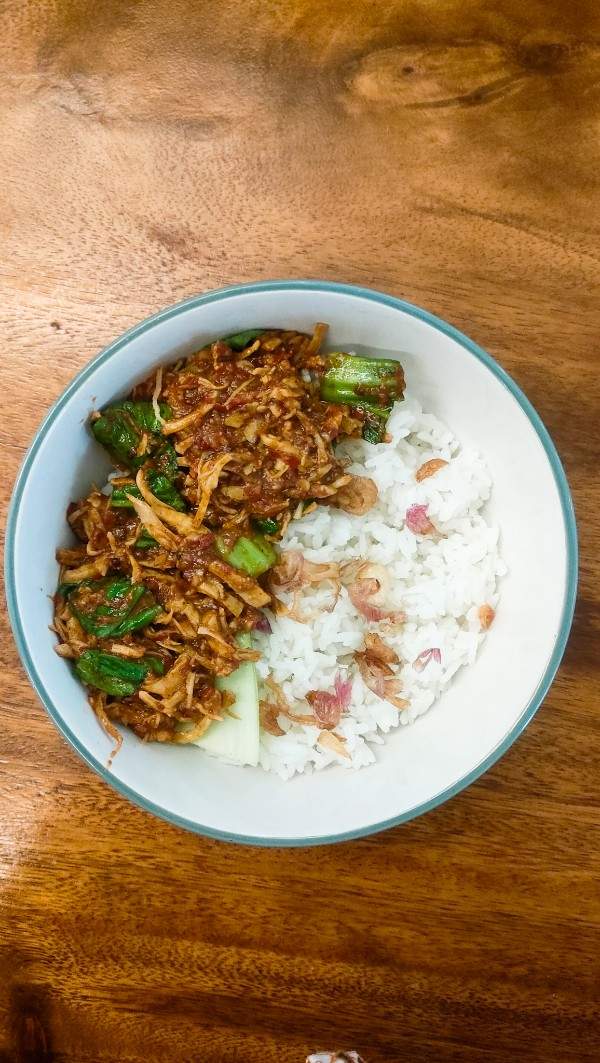
What most restaurant owners around me often misunderstand about artificial intelligence a.k AI is its feature to edit photos. While AI in digital marketing finds its most potent expression through personalised recommendation systems.
I heard a friend’s complaint as he read a WhatsApp blast from a rice bowl shop today. So the blast was about promos on the beef bowl. Actually, my friend is a vegetarian who had faithfully ordered only a mushroom bowl for months.
I realise that actually the WhatsApp admin only blasts identical messages about the discount. But then, without any apparent desire, my friend simply hit ‘unsubscribe’. “Perhaps I’ll return one day, ” he says. “But only if I miss their mushroom rice bowls. Besides, there are still a lot of other restaurants.”
Wew.. bombarding customers with irrelevant messages is indeed more dangerous than ignoring them. If only this rice bowl shop used an AI tool, it would help them thrive by remembering what their customers actually want. That’s a big difference between a rice bowl shop that barely survives and one that actually prospers.
Spotting Sales Patterns You’re Missing
You probably have a lot of marketing questions whose answers have been hold by your cashier system. However, the problem is that you never look at it. Do you know that AI can analyse every transaction and reveal patterns to create strategy that would take months to spot manually?
First, you must’ve held data about all bills released from your cashier machine each time your guests pay. The machine can give you a sheet which mentions which customers come on what day, what time, what menu(-s) they order, and how much they spend.
This sheet must’ve been able to be converted into an Excel or a Google Spreadsheet file, mustn’t it? You just need to upload it into a generative AI chatbot (like ChatGPT, for example). Then you can ask some light questions like, “What menus are often sold at lunch hour?” or “What menus often flop at night shift?”
A friend of mine who also handles a merchant in food delivery has tried this simple method. Click here to find out more.
My friend offers rice bowl. She discovered her chicken katsu bowls outsold everything at lunch. But this menu flopped after 3 PM. Meanwhile, budget-friendly veggie bowls gained traction slowly at lunch but picked up speed in the afternoon.
Thank God that AI was there. Because without AI, she’d run chicken katsu promotions at dinner…and wondered why customers weren’t biting.
AI identifies best-sellers, slow movers, peak hours, and quiet periods. And even if you have sales data for months, you will find that weather patterns affect orders. This insight eliminates poor targeting and turns random promotions into campaigns that actually convert.
Personalisation That Feels Natural
Another rice bowl shop in Singapore has nailed personalisation, and it’s evident in the repeat customers. Lunch hours? Quick combos and speedy service. Afternoon lull? Budget-friendly, slow-paced meals.
“It’s not rocket science, but it feels right,” the owner admitted in a marketing media.
This is because AI helped the owners create promotions that match customer preferences.
And you can imitate it. Instead of a generic “20% off all bowls,” you can offer an Instagram story about “Quick lunch combos ready in 5 minutes” during the noon rush. The AI chatbot will release this strategy if you provide the list of names of your restaurant’s neighbourhood, and the AI determines that your neighbours are offices.
Or if your cashier data shows that traffic slows after 2 PM and your mushroom salad bowls flop, you can ask the AI chatbot, “What are your suggestions to boost digital traffic to my place?”
This chatbot will perhaps suggest Instagram story promotive like “Afternoon treat: Buy two, get one free on veggie bowls”.
Owning a website amplifies this effect. When you optimise your content on the website with keywords such as “lunch around Kemayoran”, then lunch-hour cravers at Benyamin Suaeb Street or Tanah Tinggi Street will feel more inclined to visit.
So, anticipating needs creates loyalty, while random discounts just annoy customers.
Find out also how AI reduce waste and build trust by clicking THIS.
Sometimes I hear kitchen owners throw away ingredients because their promotions completely missed customer appetite patterns. Understandably, these owners were pushing slow-moving items at the wrong times and unnecessarily discounting popular dishes.
Basically, they burn money on both ends.
AI insights from the sheet file you upload will prevent this waste by revealing the real relationship between promotions and customer behaviour. You’ll discover which dishes need a push digitally and when, versus items that sell themselves during peak hours.
No more promoting your bestselling chicken teriyaki during lunch rush when it already flies off the shelf. No more discounting items that only move during specific weather patterns or days.
The benefits stack up quickly, including fewer wasted ingredients and lower promotional costs. This will strengthen the customer trust, because the offers feel thoughtful.
Customers notice when a business gets this right. They start to trust that promotions are genuinely good deals, not just attempts to move old inventory. That trust becomes the foundation for long-term relationships that go beyond single transactions.
A website can let you share these innovative promotions more widely. Instead of relying on social media posts that vanish in feeds, you have a dedicated space as a landing page.
This landing page can be styled according to a specific scheme. This scheme will make it easier for search engines to understand and recommend it for months (or years, if your SEO staff is competent enough). So customers can find current offers tailored to their preferences.
And if your next marketing step involves teaming up with influencers, make sure your team know how to handle them wisely. This should be your attention especially while working with food bloggers. They can either add your visibility or drain your budget if not managed strategically. Read this guide to working with food bloggers smartly: Working with Food Bloggers without Getting Bankrupt
Grow With AI and Content
Creating a website enables you to extend AI insights from your cashier data into storytelling that keeps people coming back. Your transaction data reveals what customers order and when, while website content converts these insights into engagement that fosters loyalty.
Imagine AI tells you customers love your rendang bowls on rainy days. You can create a post like “Perfect Rainy Day Comfort Foods” that highlights your rendang menu. Sharing the story behind your rendang recipe is a great idea too.
Ask the AI chatbot to polish it with your brand voice to prevent it from sounding generic. This chatbot can also make your menu sound compelling to your target market.
There’s no need to rush to create content for each menu. An AI chatbot can help you create a content calendar for the year. It can decide which content should be published on rainy days, and which one will perform better in the drought season.
As the content is published and people begin to visit your website, AI-driven insights from Google Analytics will gather the data. (You should certainly ask your marketing staff to install the Google Analytics code on your website.)
In the dashboard, this tool will reveal exciting data, such as “Which page (of the menu) has been visited most?”
And if your marketing staff installs a UTM-code that leads to ordering a food delivery, the dashboard can give you quick data, “Which menu that give conversion most conversions?”. Again, it is due to AI-driven insights on your website.
The long-term effects compound is real:
- Stronger online visibility because content matches searches
- Increased engagement from stories connecting to real preferences
- Steady revenue growth driven by AI precision and relationship-building content
Ready to transform your dining place business? The path forward is amplifying your taste expertise with the help of AI. Start with your cashier data, decode customer desires. Share that understanding via your website. Of course, your business should own a website.
Continue this conversation about turning everyday challenges into growth opportunities, by finding my email contact: Page of Vicky Laurentina

I am a content strategist who loves blogging about planning and optimising content for marketing insights. Follow me on LinkedIn and Instagram below.
I didn’t realize that AI so useful for various needs, including accurate maping.
Although it’s not perfect yet, because it requires regular analysis, it can be very helpfull, especially for enterpreneurs.
I think AI is one of the most sophisticated tools that available today and it’s use becoming increasingly widespread.
You’re right. Many entrepreneurs begin to see real results once they combine AI insights with their daily business intuition. This balance between data and experience is what often leads to consistent growth.
AI is changing everything so fast. Mbak Vicky your post explains it in a way that’s easy to get. I especially liked the example about using past purchase data to personalize promotions.
Thank you! What’s exciting is even small eateries can use simple AI tools to understand habits like menu preference shifts. When that data turns into decisions, digital marketing stops feeling random and starts feeling human again to personalise promotions.