Your restaurant’s SEO is generating traffic, yet your customers choose another place before they ever visit your site. Although SEO exposes your restaurant brand in search results, GEO is still necessary to determine whether your brand is selected within AI answers, where a shortlist is formed. When GEO isn’t integrated into your SEO, your brand’s traffic growth becomes disconnected from actual revenue impact.
This gap can be analysed using a clear 3-layer framework: AI citation, website traffic, and conversion. Each layer shows exactly where your brand loses demand and what actions recover it with impact you can measure on the pipeline. In the next section, you’ll follow this framework step by step and see how SEO and GEO connect directly to revenue outcomes.
Visibility Gaps Across Search Channels
Most marketers still treat traffic as the primary key performance indicator for SEO, though traffic is just one of the determinants to evaluate how the audience discovers and chooses to dine in a restaurant. Yes, SEO helps your restaurant become visible in search engine results pages (SERPs). However, GEO determines whether your business is recommended when AI platforms generate answers to high-intent customers.
I set 2 distinct metrics to measure visibility: ranking and recommendations. High rank drives a restaurant brand into exposure, while recommendations make a restaurant be selected as people’s choice for dining. This is where AI platforms work differently from lists in search engines, as they synthesise answers directly for their users from information across the search ecosystem, not just exposing links.
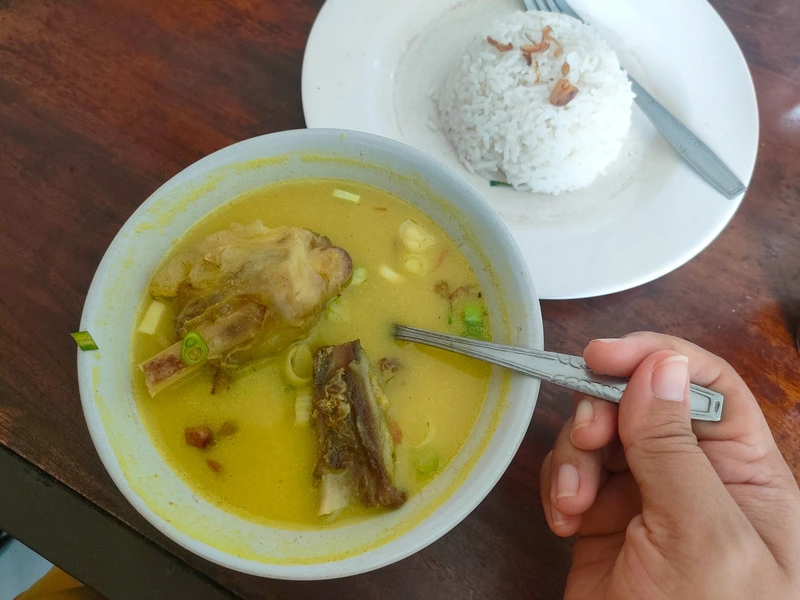
Imagine your restaurant chain in Orchard Road, which ranks for “gulai kambing in Singapore” in SERP and has acquired organic traffic for its website.
Years before, this creates a large opportunity to attract people reading your brand’s content.
But imagine when someone random types “where to eat gulai kambing around Orchard Road” in ChatGPT, then this tool mentions 3 of your competitors. Your brand’s name isn’t mentioned at all. Furthermore, this random guy decides immediately to eat, without clicking any links at all, either.
This shows how the audience decides to spend right after seeing a page of an AI platform, not seeing a SERP, nor even seeing your website.
As a result, your restaurant seems to win in SEO, but loses in GEO. The impact is losing your conversions at the exact moment the customer is ready to buy. Then, though your SEO report seems to be reaching a certain number of clicks as a KPI, the report shows that SEO doesn’t impact the business’s pipeline.
It’s not just 1 or 2 people, as in the random examples above; I’ve found many like this in the market with strong purchasing power. According to data from Traxtech, 2 out of 3 decision-makers in B2B companies research their suppliers using AI. And most of them trust the AI’s recommendations.
“Research from Magenta Associates reveals that 66% of UK senior decision-makers with B2B buying power now use AI tools, including ChatGPT, Copilot, and Perplexity, to research and evaluate potential suppliers—and 90% of these buyers trust the recommendations these systems provide.” (Trax Technologies, 2025).
The data implies that just being ranked in a search engine isn’t enough, but businesses should also be recommended in an AI-generated answer to acquire customers.
So, it’s necessary to integrate GEO in SEO. SEO brings a brand to be discovered more easily, while GEO makes it recommended. In the next section, I’ll discuss how integrating both will shift a brand from just being seen to being selected, with the outcome that you can measure.
Integrated GEO Improves Visibility Outcomes
Embedding GEO within SEO shifts the meaning of visibility from just being exposed to being selected by increasing AI citations, reinforcing ranking signals, and converting demand into income. When content gets structured to answer audience queries clearly and is supported by consistent entity signals, the SEO effort will extend its impact by pushing AI recommendations. This alignment ensures that ranking and recommendation operate as a system, directly contributing to conversion and revenue growth.
GEO Execution Framework
Executing GEO requires a clear system that connects content production with business impact. The following steps outline how connecting audience intent, content structure, and signals distribution will increase the recommendation probability while strengthening SEO performance.
Step 1. Align Content With Real Questions
First, I identify frequent queries from the target audience, then I answer them using actual operational experience. I prioritise topics where the brand is directly involved, because AI systems are more likely to reference genuine experience than general explanations.
For example, if I need to address a “gulai kambing in Singapore” query for a restaurant brand, I’ll clarify:
- outlet locations and the availability of each outlet
- whether the brand uses lamb or goat
- sourcing the origin of the meat
- what differentiates the brand’s flavour
Specific answers like these in your brand’s content will strengthen the brand’s credibility and increase the likelihood of being cited by AI.
Step 2. Publish on Owned Platform
The website that the brand owns should be used as the primary source of information about it. Search engines and AI systems rely on structured sources which has high authority. A well-organized website can reduce a brand’s reliance on third parties to create information about the brand that AI needs.
If the website can’t be crawled by AI or be defficient of clear information, AI will fill the gap by interpreting the brand from external sources, risking inaccurate representation. This is why, besides owning a website, the pages inside should be structured properly. Clear structure ensures the content can be retrieved, understood, and referenced correctly.
Step 3. Structure Content for AI Extraction
AI can understand and extract content easily when the content is organised. I habitually begin a section with a direct answer within the first 40-60 words, continuing it with supporting explanation. Controlled structure in sentences helps AI systems understand the content clearly.
Step 4. Emphasise E-E-A-T Signals
Writing first-hand experience in our content increases trust from AI in our website. AI systems can’t generate real-world experience, so they depend on input from genuine operational details. Those examples include the following:
- “We source lamb from farms in Canterbury and Kaipara in New Zealand.”
- “We prepare gulai cancang and gulai banek using Minangkabau techniques.”
- “Our gulai has been certified halal by the Islamic Council of [mention the country name].“
All of these examples position the brand as an expert, which is highly prioritised as a primary source for AI answers.
Step 5. Apply Structured Data Markup
Schema markup is my weapon in GEO to classify the role of each page. Clear classification helps AI systems understand whether a page represents a restaurant, an article, or another type of page.
Accurate structure from schema markup in each page improves the matching of the content with user queries, especially for transactional-intent searches. It will also increase the precision of citations that AI makes about the brand behind the website.
Step 6. Expand Presence Across External Sources
Extending the brand presence across trusted external platforms will create signals that the AI machine can recognise. The brand’s entity footprint can be strengthened by information from media coverage, expert reviews, industrial forums, and review platforms.
Not all of these channels are on my agenda. Rather, I prioritise platforms that:
- is easy-crawled (this is where TikTok and YouTube will be challenging)
- focus on topics of food and restaurants
- attract audiences ready to spend.
Beyond those steps above, there are also common mistakes in GEO you need to avoid, such as:
- Relying only on 3rd-party reviews without establishing your own source. For example, if you want your brand’s gulai to be mentioned by AI, then you ask a food Instagrammer to review it. But at the same time, have you established this product on your own website?
- Publishing material without operational depth or first-hand experience. A bad example happens when you just publish an article about what gulai kambing is, but you don’t mention how you handle the dish according to your own operational details.
- Tracking exposure without linking it to engagement or conversion. Don’t be just proud to be featured in Copilot, but also scrutinise whether the monthly conversion has increased ever since the citation happened.
- Using inconsistent naming across platforms. AI is confused when you name your restaurant as Gulai Kambing Datuk Rafli on a page, but on another page, you just name it Gulai Kambing Rafli.
Such issues can make it difficult for AI to understand your entity and reduce your probability of being recommended.
Strategist Role in GEO Integration
Rising clicks in Google Search Console (GSC) without a corresponding lift in leads indicates a structural imbalance where your SEO makes your brand seen in SERP, but your GEO fails to secure recommendations.
Another indicator you can see is when platforms describe your brand differently. For example:
- Your brand’s website positions it as a Minang-specialist known for gulai kambing and rendang
- ChatGPT highlights it as a place that serves nasi kapau and dendeng balado
- Copilot frames it as a depot that serves kalio baulik
These inconsistencies will dilute your brand’s positioning right at the moment customers determine which restaurant they will dine in. Though these inconsistencies show broad competence in Minang culinary, they can fragment relevance in your brand for a gulai. When a diner searches specifically for gulai kambing through an AI interface and your brand’s entity isn’t relevant, your brand will be removed from the recommendation.
AI systems work by comparing information across multiple sources to determine which restaurant most consistently matches a query. Brands that achieve mentions from multiple credible sources will gain priority.
While brands that only get mentions from weak sources or even zero ones will be deprioritised to be included in AI-generated answers.
Lost demand in your brand won’t appear in your SEO reports, as long as your SEO primary metric is only traffic.
Vicky Laurentina, 2026
But you’ll be aware of it when diners influenced by AI recommendations move directly to competitors’ reservation forms after these competitors become more well-defined across platforms.
Resolving this gap requires aligning SEO and GEO as a system. A content strategist like me operates at this intersection, ensuring that the acquired visibility drives recommendations.
Operationally, I audit a brand’s GEO by actions in the table below:
| Audit Activity | Strategic Action |
| Identifying whether the brand appears in AI-generated answers | Identifying audience questions likely to be asked in AI platforms |
| Mapping which platforms surface the brand | Ensuring the website structure can be retrieved by a machine |
| Tracing the queries that trigger those mentions | Organising content for being extracted and interpreted clearly |
| Reviewing how accurately AI platforms describe the brand’s core services | Ensuring that the service position aligns with query intent |
Earlier SEO approaches focused on aligning the website’s keywords to be more discoverable. GEO-integrated SEO shifts focus to make the entity clearer, increasing the entity’s likelihood of appearing in AI-generated shortlists that directly influence conversion.
Continuous alignment across platforms prevents marketing performance from declining, and it keeps the brand competitive against others already integrating GEO within their SEO systems.
Tools and Measurement for GEO Impact
To measure how GEO impacts a brand, I build my framework into visibility, traffic, and technical.
The food brand’s visibility is evaluated by me using a tool named HubSpot AEO Grader. This tool checks:
- how many mentions the brand gets from AI tools like ChatGPT, Perplexity, and Gemini
- what makes the brand stand out compared to its competitors in those AI tools
- how the brand is perceived in the food industry in AI tools
- the language in AI responses for queries about the brand
Then I use another tool named Google Analytics 4 to access traffic attributed from this visibility. With this tool, I can find:
- traffic count from the AI tool to the brand’s website
- time on site from AI traffic
- which pages are visited by visitors who come from AI tools
- engagement rate by AI-attributed traffic
Low traffic from AI platforms can be due to low AI citations, too. Therefore, I monitor AI citations using another tool named Ahrefs. Different from the previous tool, I use Ahrefs to compare if there’s any increase or decline in AI citations, and this data can help explain the progress of the GEO traffic.
The other tool that is also important for me to introspect GEO is GSC, particularly its Enhancement menu. This menu helps me detect technical stuff like invalid items on the brand’s webpage to prevent them from reducing its AI visibility. Invalid items are structural errors that hinder the AI machine from understanding the webpage.
Evaluating GEO impacts for a restaurant brand, at least its AI visibility, helps the brand monitor whether it’s still relevant to the audience who increasingly seeks information on AI platforms.
Without deliberately executing GEO, your brand can’t control its sentiment in AI-generated answers, though SEO has made it win any queries intend to. Missing effort in GEO, which leads to an unstructured entity of the brand, will make your SEO work less optimally. It will finally affect the brand’s revenue and make your SEO budget questionable.
Closing the gap between visibility and revenue requires someone who understands the technical architecture of the search system and entity logic to help AI understand and able to form recommendations. My work in integrating GEO in SEO creates a content system that compounds visibility in search engines and AI-generated answers, rather than separating budget allocation for different disciplines. Find out on my profile page about how the integration of content and the visibility system makes your business stand out more easily.

I am an SEO specialist with experience as a content strategist. I blog about planning and optimising content for marketing insights. See my profile page to find out more about me. Follow me on LinkedIn and Instagram.
Dulu kalo mau nongkrong di kafe aestetik atau ramah kantong, saya sering search google dan muncul itu web web yang memuat tempat nongkrong, sekarang cukup tanya AI. Ini bikin nulis di web atau promo lewat web jadi tantangan sik karena sekarang gak cukup cuman masuk halaman satu google. Makin banyak PR penulis web atau pemilik usaha yaaaa tapi emang kita kudu adaptasi sama jaman, suka atau gak suka .. tp artikel mbak Vicky memberi solusi untuk ini, thank you
Banyak temen saya yang sekarang juga suka nanya-nanya AI sebelum ngafe dulu. Jadi memang tantangan sekarang buat pemilik usaha kafe itu ya, apakah AI-nya itu kenal sama kafe itu apa enggak.
Saya pernah lihat kafe yang udah nongol di mana-mana: di Google ada, di TikTok ada, di Instagram juga ada. Kelihatanlah di sana bahwa kafenya itu punya daya tarik ini, daya tarik itu.
Di AI, kafenya juga pernah disebut. Tapiii..AI-nya nggak tahu apa daya tarik kafenya kalau dibandingkan kafe-kafe lain yang mirip-mirip.
Ternyata penyebabnya, AI-nya lebih sering ngambil informasi tentang kafe itu dari sumber yang bukan milik kafenya sendiri. Alhasil, daya tarik kafenya nggak tercantum ketika AI merekomendasikan kafe itu. Singkatnya, AI-nya itu seolah-olah cuma bilang, “Ini cuma sebuah kafe yang lain lagi di kota X.”
Makanya ya GEO itu tetep dibutuhin meskipun kafenya sudah nongol di Google. Karena ketika Google membantu kafenya ditemuin di Google, GEO bekerja dengan cara lain; bantu AI ngerti dan merekomendasikan kafe itu sesuai positioning yang diinginkan kafenya.
Ah iya ya, sekarang banyak orang klo mencari sesuatu di mesin pencari, seringkali pakai AI seperti chat gpt atau co-pilot.
Itulah makanya SEO saja nggak cukup ya, sekarang ada yang namanya GEO
Kerangka kerja GEO membantu SEO lebih optimal ya
Aku baru belajar soal GEO ini mbak
Baca artikel ini jadi lebih tercerahkan
Wah, baru belajar ya? Banyak lho orang yang baru kenal GEO biasanya langsung menganggap GEO itu pengganti SEO. Padahal saya rasa sih malah sebaliknya.
Kalau dipikir-pikir, SEO dan GEO sama-sama bisa tetap diperlukan meskipun website-nya sudah bagus performanya di Google. Soalnya yang berubah sekarang itu cara orang mencari informasi, jadi pemilik website-nya ya mesti adaptasi juga.
Dulu orang cenderung membuka beberapa halaman lalu membandingkan sendiri. Sekarang semakin banyak yang meminta ringkasan dulu ke AI sebelum memutuskan mau membaca lebih lanjut atau tidak. Selama perilaku pencarian orang terus bergeser ke arah itu, GEO masih tetap diperlukan meskipun SEO sudah diterapkan dengan baik.
Kalau menurut Dian, ada nggak bedanya kelakuan orang-orang jaman now setelah buka ChatGPT/Copilot dengan kelakuan orang-orang waktu nyari-nyari info sebelum ada alat-alat itu?